
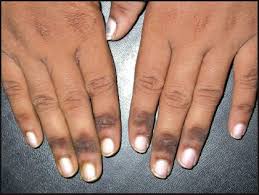
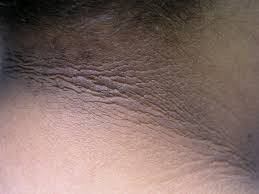
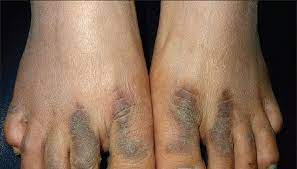
Acral Acanthosis Nigricans (AAN) is a rare and typically benign skin condition that presents as hyperpigmented, thickened, velvety patches on the skin — specifically on the acral areas (i.e., the extremities like the hands, feet, fingers, and toes).
Key Features of Acral Acanthosis Nigricans
| Feature | Description |
|---|---|
| Location | Dorsal surfaces of hands, feet, fingers, and toes |
| Appearance | Hyperpigmented (brown to black), thickened, velvety plaques |
| Onset | Usually gradual and asymptomatic |
| Symptoms | Generally asymptomatic, may have mild pruritus (itching) in some cases |
| Histology | Similar to other forms of acanthosis nigricans: papillomatosis, hyperkeratosis, and acanthosis |
Causes and Associations
Acral Acanthosis Nigricans is often classified as benign and is not typically associated with internal malignancies, unlike the malignant form of AN.
Common associations include:
-
Ethnicity:
-
More prevalent in individuals with darker skin tones, particularly of African descent.
-
-
Genetic Predisposition:
-
Can be idiopathic or familial.
-
-
Endocrine Associations:
-
Less commonly associated with insulin resistance or metabolic syndrome than other AN variants.
-
-
Drug-Induced:
-
Rarely, can be associated with medications (e.g., nicotinic acid, insulin, or corticosteroids).
-
Differential Diagnosis
-
Malignant Acanthosis Nigricans (usually involves mucosa and is more widespread)
-
Confluent and Reticulated Papillomatosis
-
Lichen Planus
-
Tinea nigra
-
Post-inflammatory hyperpigmentation
Management
Since AAN is often benign and cosmetic, treatment is generally not required unless for aesthetic or symptomatic reasons.
Options include:
-
Topical keratolytics (e.g., salicylic acid, urea)
-
Topical retinoids (e.g., tretinoin)
-
Laser therapy (for cosmetic purposes)
-
Treating underlying causes (if identified)
Prognosis
-
Usually benign with a stable or slow progression.
-
Not considered a marker for malignancy or systemic disease in most cases.